

There’s a conversation happening right now that I find deeply uncomfortable, and it goes something like this: Women adopt AI slower than men, but actually, women are better coders / better organisers / better at running lean startups.
I get the intent. I do. It’s a counter-narrative meant to reassure, to reclaim space, to say we belong here too. But every time I read it, I feel something twist. Because the moment we frame it as “who does it better,” we’ve already lost the plot.
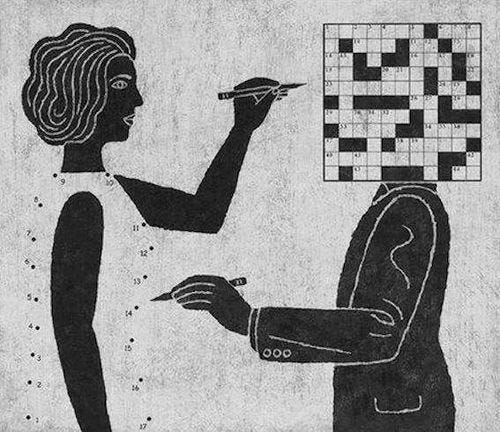
The Problem with “Better”
Let me be clear: this isn’t about false humility or denying women’s capabilities. It’s about rejecting a framework that traps us in a zero-sum game where someone *has* to be incompetent for someone else to be competent. Where excellence is competitive rather than collaborative. Where the question isn’t how can we all contribute? but who wins?
This logic, this constant measuring, ranking, comparing, is the same logic that now overrules our global order in geopolitics. It’s the logic that says there must be winners and losers, that power is finite, that collaboration is weakness. And I refuse to accept that this is the only way forward, especially when we’re building the future of technology.

The truth is, some women will be extraordinary at AI. Some will be mediocre. Some men will be brilliant. Some will be incompetent. *And that’s fine.* That’s human. The question shouldn’t be which gender does it better, it should be *who gets the chance to try at all?*
The Real Divide Isn’t Gender. It’s Opportunity.
Here’s what no one wants to talk about when they discuss the “AI adoption gap”: Who has the time and resources to upskill, experiment, launch startups, fail, and try again?
Because yes, I’ve worked in the startup tech bro world. Yes, the room is often full of men. But more than a matter of gender, it’s a matter of privilege. When you’re juggling unstable jobs and childcare, especially as a woman from the Global South, where is the space for you to spend weekends teaching yourself machine learning? To pivot your career into AI? To take the financial risk of launching something new?
Is poverty a choice? Is lack of access a personal failing? Or is it a systemic reality that we keep ignoring because it’s easier to debate women vs. men than to confront who gets to participate in shaping our future?
I think about this often. I think about the people who are absent from these conversations not because they lack talent, but because the baseline conditions for entry are out of reach. When the narrative becomes “women are slower to adopt AI,” we flatten a complex issue into a gender binary and lose sight of the deeper question: Who is being left behind entirely?

Collaboration, Not Competition
Surprisingly, and I mean this sincerely, the tech space is one of the industries where I’ve encountered genuine respect for women’s ideas. Not always. Not everywhere. But more than I expected (just my personal experience, please do not generalise). When I’ve contributed, when I’ve asked questions, when I’ve challenged assumptions, I’ve often been heard.
But that respect is fragile. It exists in pockets. And it’s threatened every time we revert to competitive framing, every time we treat innovation as a race with gendered lanes.
What if, instead, we focused on creating spaces of integration that are for everyone? Not just women. Not just men. But people from different geographies, different economic realities, and different lived experiences. Because the future of AI, the future of humanity, shouldn’t be defined by a handful of tech giants and venture capitalists in Silicon Valley.
It should be shaped by all of us.
We Keep Missing the Point
When we keep battling men vs. women, we lose focus on what actually matters: opening the space for communal collaboration. For diverse perspectives. For people who think differently, build differently, ask different questions.
The slower adoption of AI among women is real. The limited number of women understanding AI beyond ChatGPT and basic agents is real. But the solution isn’t to prove we’re better. It’s to dismantle the barriers that keep so many of us, across genders, across borders, across class lines, from participating in the first place.

Because if we don’t? If we let this remain a game for the privileged few? Then we’re not just replicating the same old power dynamics. We’re embedding them into the systems that will govern our lives for generations to come.
So What Now?
I don’t have all the answers. But I know this: I’d rather spend my energy building bridges than keeping score. I’d rather create pathways for people who have been excluded than defend my place in a hierarchy that shouldn’t exist.
The future is being built right now, with very few diverse perspectives at the table. And whilst learning how to be more productive with AI is good, being users doesn’t make us literate. It doesn’t help us shape this technology in more inclusive, ethical ways.
We need to change this. Not just for ourselves. For all the women before us who fought for our right to education and democracy. For the generations to come who deserve a world where opportunity isn’t determined by geography, gender, or wealth.
Start building a more equitable future. Not because you’re better. But because you’re here, and your voice matters.
And that should be enough.